Wood Floor Refinishing and Repair in Marietta

Cupped boards, termite damage, worn builder oak and carpet you are done with, handled by a crew that measures before it sands.

Marietta Wood Flooring has spent more than 20 years refinishing, repairing and installing hardwood floors in Marietta, GA and the surrounding Cobb County neighborhoods. We sand and refinish worn oak, repair water and termite damage, rebuild carpeted stairs in wood, and install solid, engineered and patterned floors from the subfloor up.

Most of the floors we see were never the problem on their own. A crawlspace let summer humidity into the boards, a supply line leaked behind a dishwasher, or a previous crew sanded a cupped floor flat before it dried. We start by finding the cause, because a new finish over an unsolved moisture or pest problem fails in the same place within a season.

Every job begins with a walk-through, a moisture reading and a written, itemized estimate. You see what the floor needs, what it does not need, and which choices change the price before anything is sanded or torn out.

Get Your Free Quote

Fast response • No obligation

So we can reach you about your request.

So we can send you a confirmation after you submit this inquiry form.

  • 20+ Years on Wood Floors
  • Free Written Estimates
  • Moisture Checked Before Sanding

What we do

Our Services

Hardwood floor refinishing, repair and installation in Marietta, GA

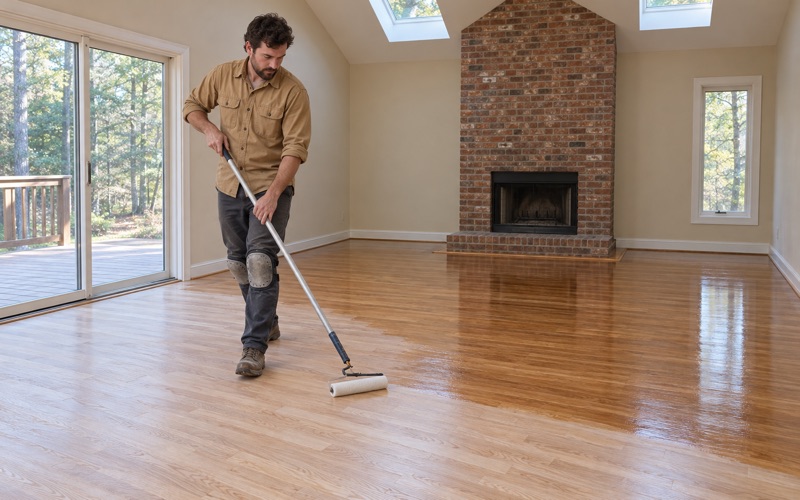
Worker walking backwards while rolling clear finish over sanded oak floors in the vaulted family room of a Marietta house.

Wood Floor Refinishing

Full sand-and-refinish for worn, scratched or orange oak, heart pine and maple floors, with moisture and remaining wood checked before we sand.

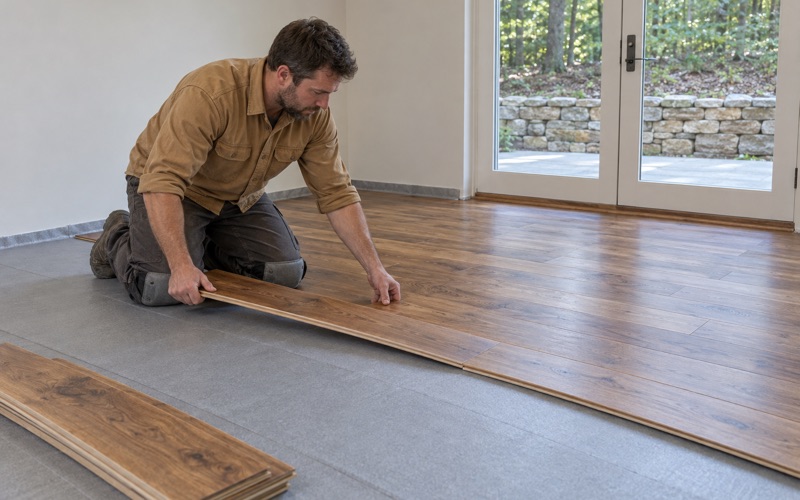
Worker angling an engineered hardwood plank into place over underlayment in the terrace-level room of a Marietta house.

Engineered Hardwood Flooring

Engineered hardwood installed over slabs, terrace levels and wood subfloors, with moisture testing and the wear layer matched to how long you plan to stay.

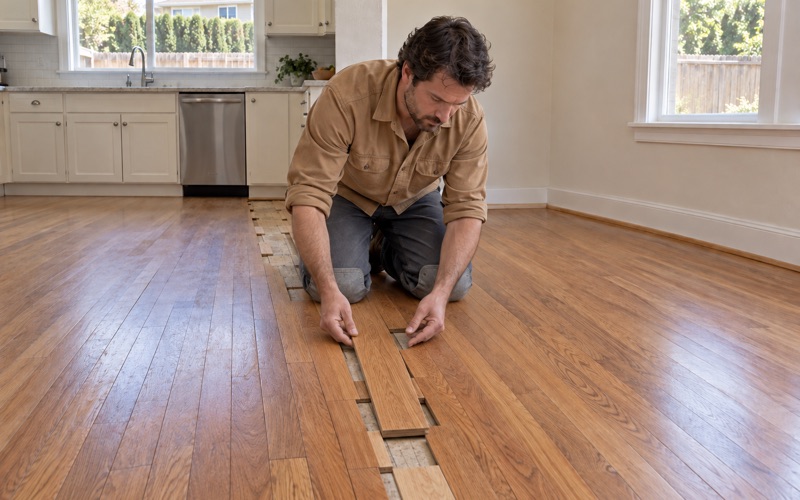
Worker weaving new oak boards across the strip where a wall was removed between a kitchen and dining room in a Marietta house.

Hardwood Floor Repair

Board replacement, lacing in, squeak and soft-spot repair, and patching where a wall, register or floor furnace came out, matched to your existing floor.

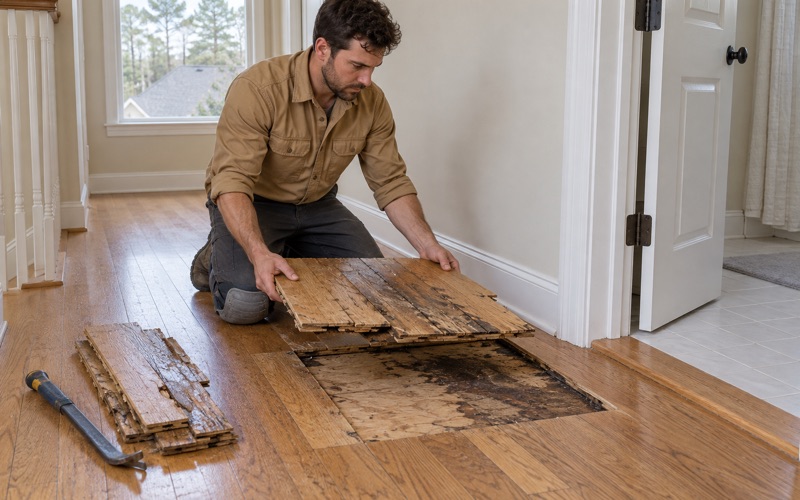
Worker lifting out a swollen, stained section of oak flooring in a hallway outside a bathroom in a Marietta house after a leak.

Hardwood Floor Water Damage

Water-damaged hardwood traced, dried, measured and photographed room by room, then repaired, laced in or replaced once the readings say it is safe.

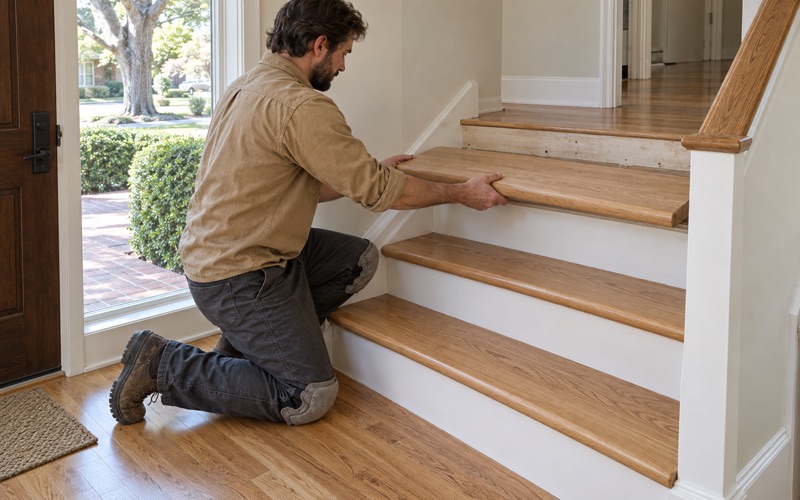
Worker setting a new red oak tread with a rounded nose on the half flight of stairs in a Marietta split-level house.

Hardwood Stairs

Carpeted stairs converted to hardwood treads and risers, worn steps refinished by hand, and stair color matched to the floors above and below.

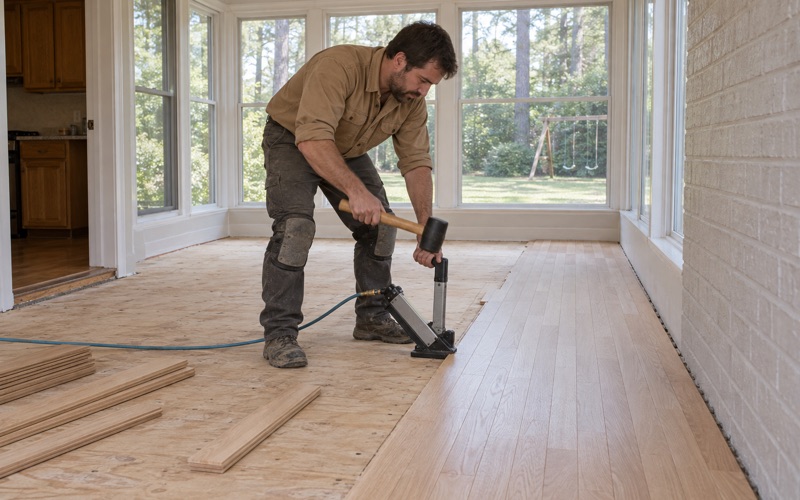
Worker striking a flooring nailer seated on the tongue of a solid oak board in a sunroom of a Marietta house.

Hardwood Floor Installation

New solid and engineered hardwood floors installed over a checked, flattened subfloor, acclimated first and fastened the way the manufacturer specifies.

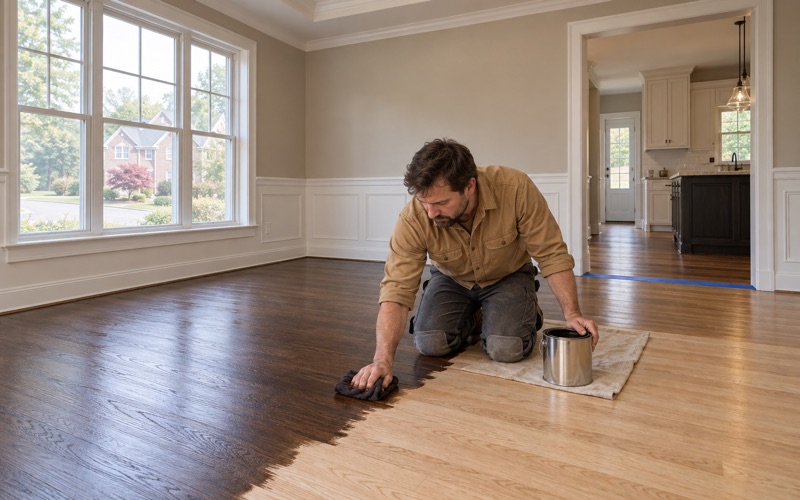
Worker wiping dark stain across sanded oak boards with a folded cloth in the dining room of a Marietta house.

Hardwood Floor Staining

Stain color changes on oak, maple and pine floors, tested with samples on your own boards and sealed with the finish that suits the new color.

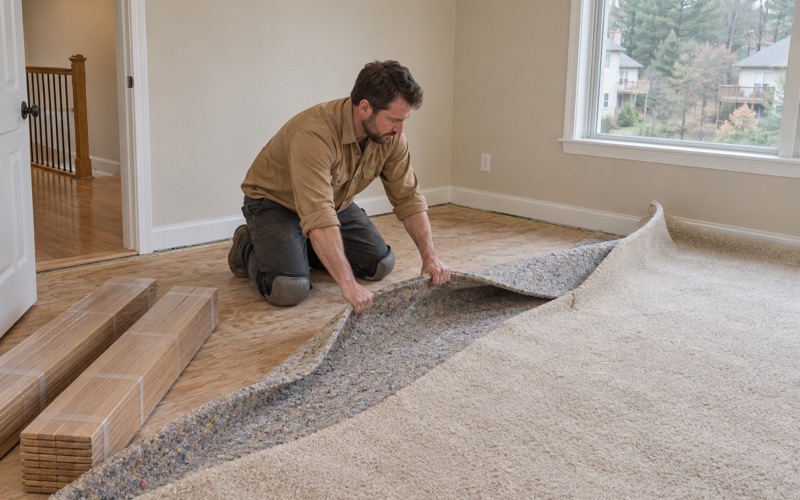
Worker peeling old carpet and pad back from a bedroom floor in a Marietta house where new hardwood will go down.

Replace Carpet With Hardwood

Carpet pulled up and replaced with solid or engineered hardwood, from one bedroom to a whole upstairs, with stairs and transitions handled in the same job.

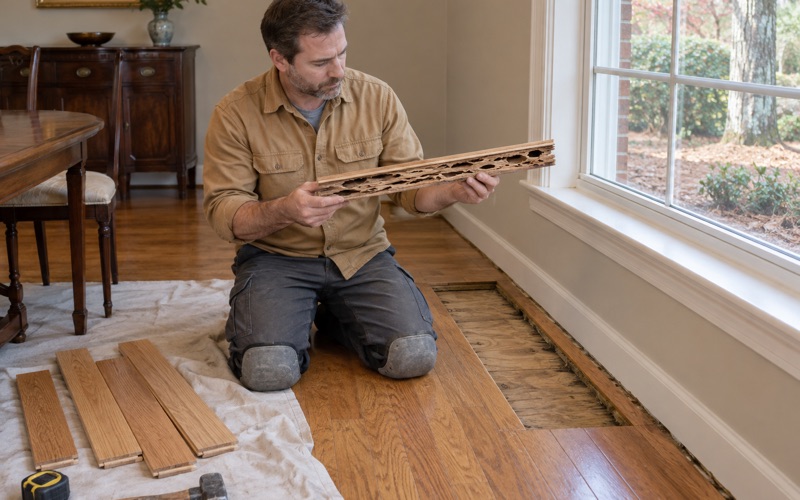
Worker holding a termite-damaged oak board with hollowed channels, cut out of a floor in a Marietta house after treatment.

Termite Damaged Floor Repair

Hardwood boards damaged by termites or powderpost beetles cut out after treatment and laced in with matching wood, with scopes ready for closings.

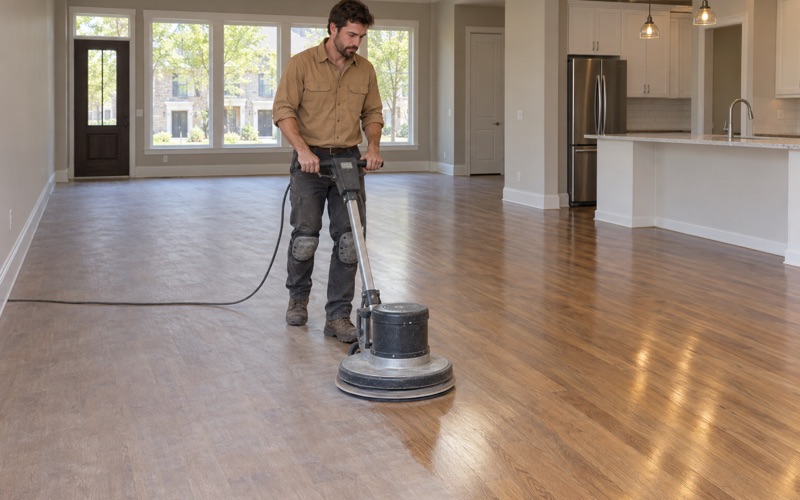
Worker running a floor buffer with a screening pad across a dull oak floor in the open main level of a Marietta townhouse.

Screen and Recoat

A fresh topcoat over a dull or lightly scratched finish, done without sanding into the wood, so a sound floor keeps its wood for future refinishing.

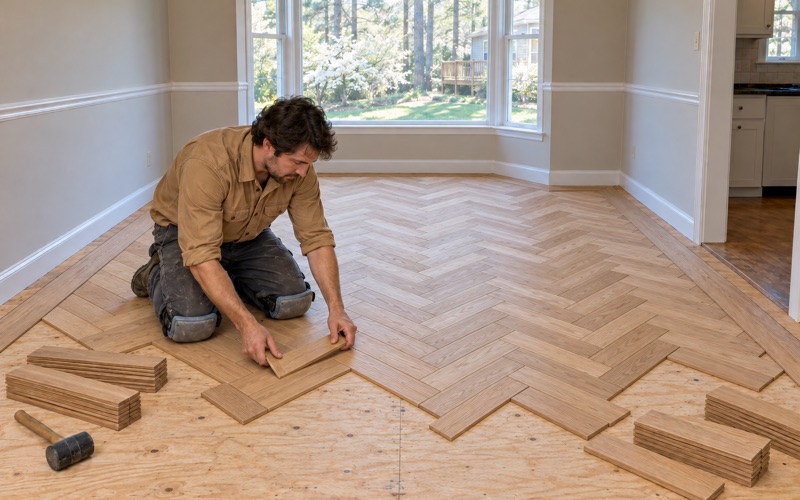
Worker setting white oak herringbone slats inside a border in the dining room of a Marietta house.

Herringbone and Wide Plank Floors

Herringbone, chevron and wide plank wood floors laid out from a planned center line, acclimated and fastened so the pattern and seams stay tight.

Two Decades on Marietta Wood Floors

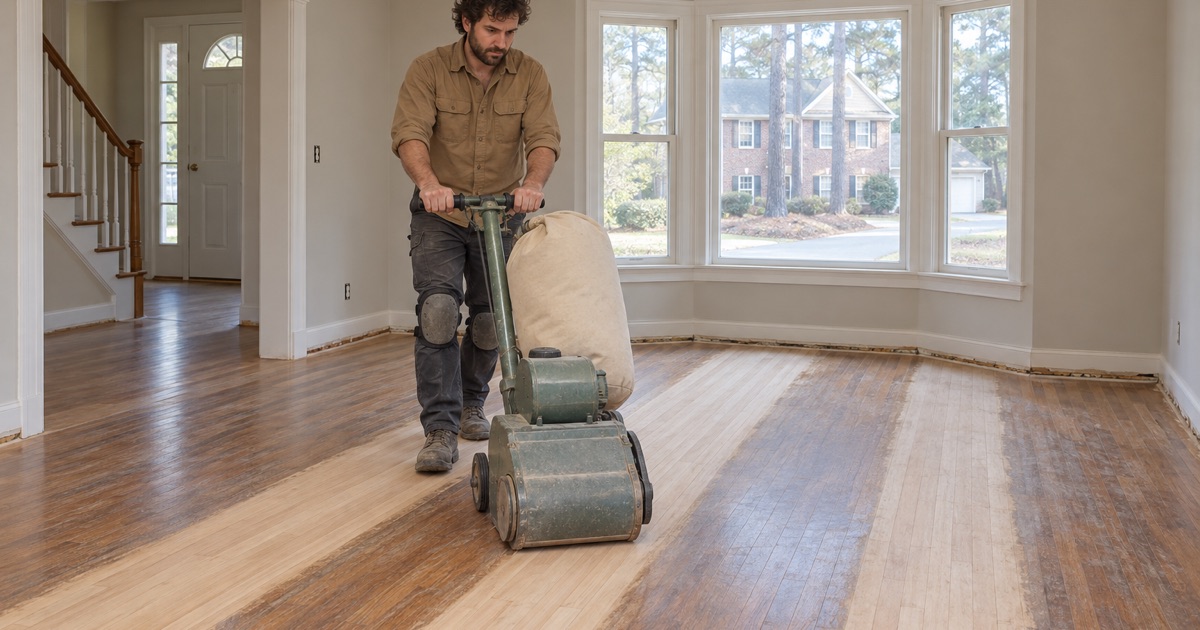
Worker guiding a drum sander down red oak strip flooring in the living room of a 1980s two-story house in Marietta.

More Than 20 Years of Floor Work

Our crew has worked on wood floors for more than 20 years, long enough to have refinished the same builder oak twice and to recognize a floor that has already lost too much wood above the tongue. That history is why we measure what is left before promising another sanding, rather than discovering it halfway through the job.

Why Choose Marietta Wood Flooring

Moisture Read Before Sanding

Every cupped floor gets a moisture meter reading before a sander touches it, because a Georgia summer can crown boards that are still wet underneath. Sanding them flat too early leaves the floor crowned once it dries, so we wait for the numbers rather than grinding off the evidence.

Termite Damage Laced, Not Filled

No termite or powderpost beetle damage gets putty and stain from us. Once the pest company has treated, we cut out the hollow boards and lace in matching stock, so the repair holds weight and survives the next inspection rather than hiding a soft spot under fresh finish.

Builder Oak Checked First

Thousands of Cobb County subdivision homes have red oak that has been sanded before. Each one gets its remaining wood above the tongue checked before we quote a refinish, so you pay to restore a floor that can take it rather than for a sanding that breaks through into the groove.

Old Finishes Identified

Older Marietta houses often carry paste wax or shellac under a later coat. We test and strip those finishes before modern polyurethane goes down, so the new finish bonds to clean wood instead of peeling off a waxy layer a year later.

Stairs Priced by the Tread

A staircase is not a rectangle of flooring. Our stair estimates count every tread, riser, nosing and landing, so the number on paper matches the work rather than a square-foot guess that grows once the carpet comes off.

Finish Chosen by VOC Category

Clear floor finishes fall under the federal varnish category in 40 CFR 59 Subpart D, not the floor-coating number meant for opaque coatings. We choose finishes by the category that actually applies to them, so the product on your floor is the one the rule was written for.

When Something Is Wrong With The Floor

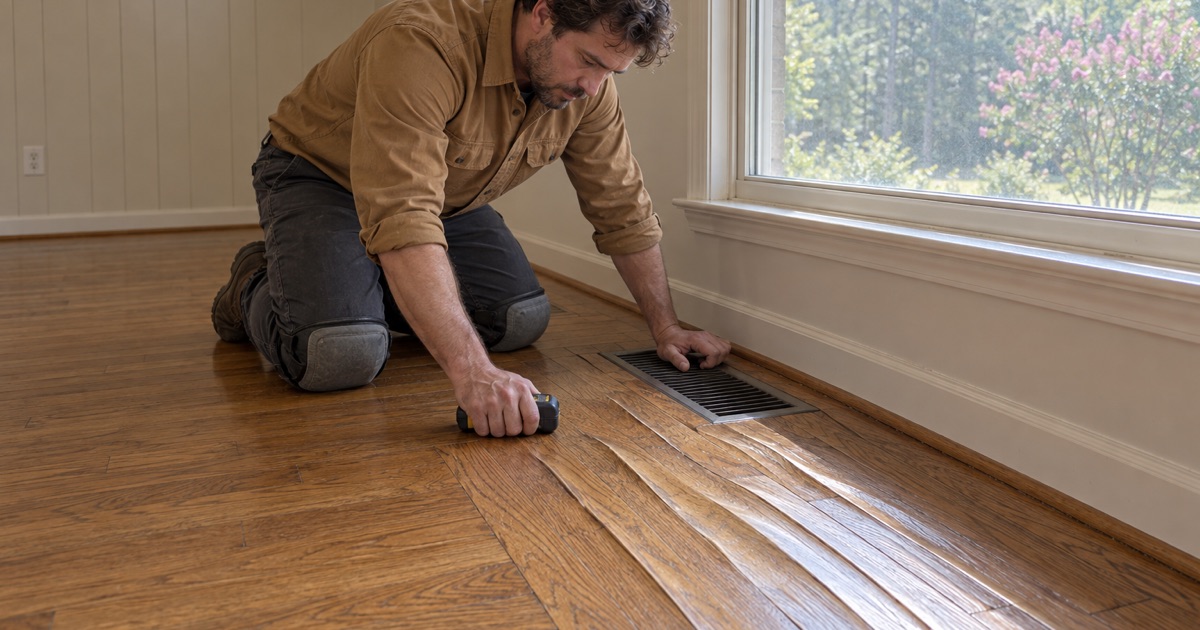
Worker pressing a moisture meter onto humidity-cupped oak boards beside a floor register in a Marietta den.

Humidity Cupping and Board Gapping

Cupping is when board edges rise above the centers because moisture is coming from below, often a damp crawlspace in a humid Georgia summer. We find the moisture source, dry the floor and track readings until it settles. Most cupped floors flatten on their own once dry, which saves you from sanding away wood you still need. Winter gapping is the same movement in reverse and rarely needs more than patience.

Vacant-House Cupping

Houses that sat empty with the HVAC off through a Georgia summer often cup across every room at once. We check the crawlspace, the vapor retarder and the dehumidifier before judging the floor, because the fix for a house that lost climate control is usually drying, not replacing. That distinction matters to sellers and investors pricing a vacant property.

Subterranean Termites and Powderpost Beetles

Subterranean termites leave mud tubes and hollow boards; powderpost beetles leave pinholes and fine frass; the old house borer leaves larger oval exits. We read the damage pattern, wait for treatment, then cut the affected boards back to sound wood and replace them. Floor repair after pest damage is carpentry, not a cosmetic touch-up.

Appliance Leaks and Water Damage

A dishwasher, refrigerator line or supply valve can soak boards for weeks before anyone sees a stain. We trace how far the water traveled, dry the floor and subfloor, and photograph readings room by room before deciding what comes up. Dried boards are often saved; boards left wet too long are replaced and laced in.

Pet Urine Stains Gone Black

Pet urine that sits in oak reacts with the wood and turns it black, and that color goes deeper than any sanding can reach. We sand first to see what remains, then replace the boards that stay dark. Trying to bleach or stain over deep pet urine stains usually leaves a gray shadow that still shows.

Squeaks, Loose Boards and Soft Spots

Squeaks usually mean boards or subfloor moving against fasteners or a joist. We locate the movement from above and, where there is a crawlspace, from below, then refasten or shim it. A soft spot is different, and we check it for rot, termite damage or a failed subfloor before covering anything.

Hollow-Sounding Glue-Down Engineered Floors

Glue-down engineered floors that sound hollow underfoot have lost their bond to the slab or subfloor. We map the hollow spots, inject adhesive where the bond can be restored, and replace boards where it cannot. Left alone, those loose areas crack at the joints and eventually lift.

Swollen Laminate and Vinyl Plank

Laminate swells at the edges when water reaches its core, and floating vinyl plank can pull apart when the room moves or the expansion gap was pinched. Neither can be sanded. We replace the damaged run or, when a homeowner is ready, take the whole floor up and install hardwood in its place.

Deep Scratches, Dents and Traffic Lanes

Traffic lanes turn gray once foot traffic wears through the finish into bare wood. Deep scratches and dents from furniture or pets go into the wood itself. Both need a full sand to the grain; a recoat alone would seal the damage under a fresh, shiny layer.

Peeling, Tacky or Cloudy Finish

A finish that peels, stays tacky or goes cloudy usually failed because of contamination, incompatible coats or moisture. We identify the cause first, whether old wax, a cleaning product or humidity during curing, then strip and refinish so the next coat cures properly.

Restoring The Wood You Already Have

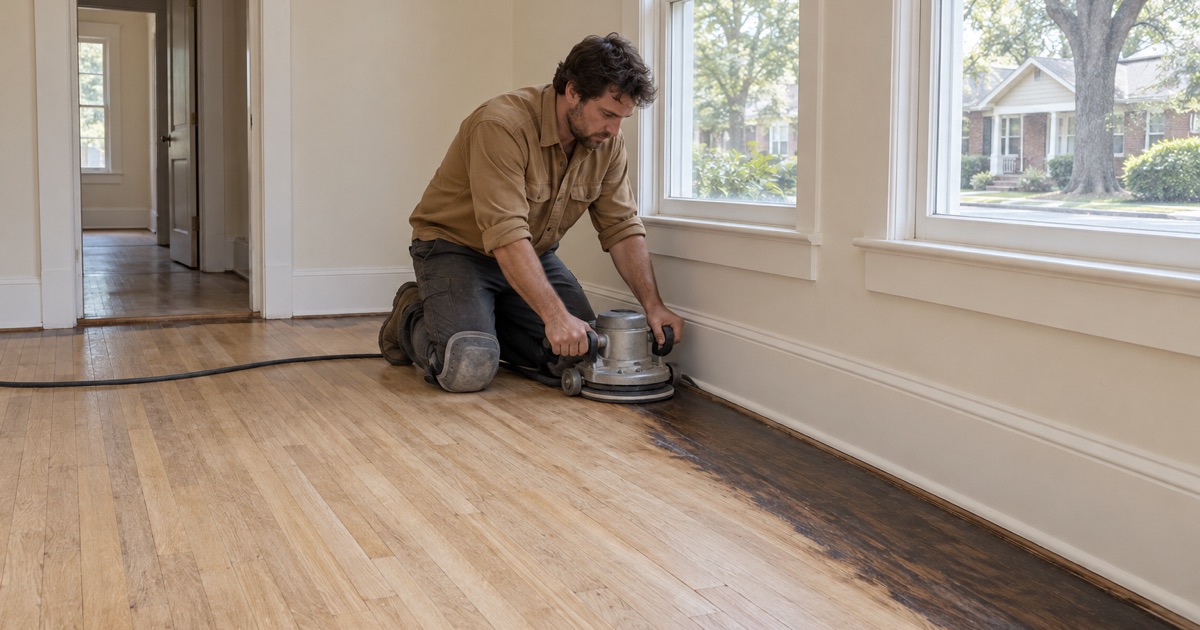
Worker running an edger along the wall where an old darkened finish is coming off narrow oak flooring in an older Marietta house.

Full Refinish Versus Screen and Recoat

A full refinish sands through the finish into bare wood with a drum sander and an orbital sander, working through a grit sequence before stain and new coats. A screen and recoat only abrades the top coat and adds another. We tell you which one your floor needs, and many well-kept floors need only the cheaper one.

Orange Oak Back to Natural

Orange oak is usually an oil-modified finish that has ambered over the years on red oak. Sanding it off and finishing with a clear waterborne polyurethane brings the floor back toward its natural tone. We show the result on a sample patch so you see how your specific boards look before committing.

Heart Pine and Old Pine Floors

Heart pine and other old pine floors in older Marietta houses are softer than oak and often carry wide gaps, nail holes and decades of finish. We sand them with a gentler approach, decide gap by gap what to fill, and choose a finish that keeps their warm color rather than fighting it.

Stripping Paste Wax and Shellac

Paste wax and shellac were standard floor finishes for decades, and modern polyurethane will not bond to either. We test for them before quoting and remove them fully during sanding. Skipping that test is how a brand-new finish peels in sheets within months.

Changing Builder Oak Stain Color

Builder oak in a Cobb County subdivision is often a honey or golden stain that owners want darker, grayer or natural. A color change means a full sand to bare wood, water popping where needed, and stain samples on your floor. We check the remaining wood above the tongue first, because color changes need clean, fresh wood.

Blotchy Stain on Maple and Pine

Maple and pine absorb stain unevenly, which is why they turn blotchy where oak takes color evenly. We test on the floor itself, adjust the preparation and often recommend a lighter tone or a clear finish. A blotch-free result on maple comes from choosing the right color, not from sanding harder.

Stair Refinishing Tread by Tread

Stair treads, risers and nosing cannot be run with a floor sander, so each tread is sanded and finished by hand. We match the stain to the adjoining floor and finish every step so the staircase reads as one piece with the rooms around it.

Patching Removed Walls and Floor Furnaces

When a wall comes down or an old floor furnace is removed, the floor underneath has a gap or a hole. We weave matching boards into the old run instead of setting a square patch, so the repair follows the existing pattern and disappears once the room is sanded and finished together.

Matching New Boards to an Old Floor

Matching starts with species, width, cut and age. We source boards that fit the old floor, lace them in with staggered joints, and sand the new and old wood together so the finish evens out the difference. Where a perfect match is impossible, we tell you before installation.

Hardwood Under Carpet or Linoleum

Many older homes hide hardwood under carpet or glued-down linoleum. We check the condition under the carpet pad and tack strip, and whether an adhesive layer is safe to disturb, before promising a refinish. If linoleum or tile sits on black mastic, we stop and refer that removal to a licensed abatement contractor.

New Hardwood Floors

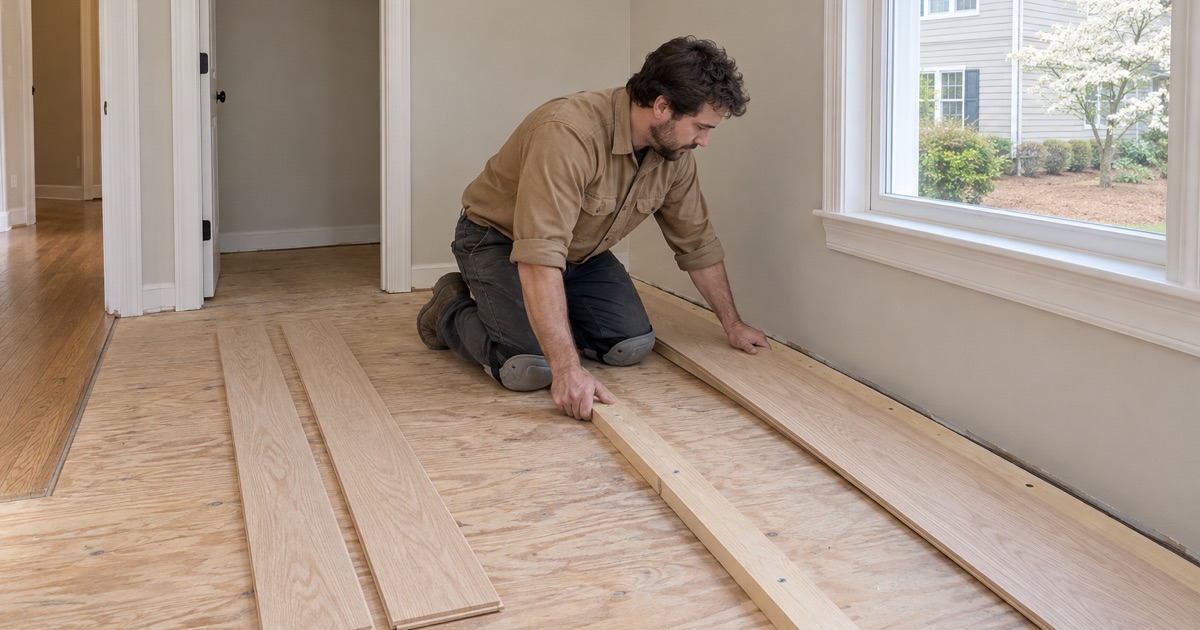
Worker setting the first row of new solid oak flooring against a straight guide board in a Marietta bedroom.

Carpet to Hardwood Conversions

Replacing carpet with hardwood can be a single bedroom or a whole level. We remove carpet, pad and tack strip, check the subfloor for flatness and squeaks, and install a floor that transitions cleanly into the existing rooms. Matching existing hardwood across a doorway is part of the plan, not an afterthought.

Carpeted Stairs Rebuilt in Wood

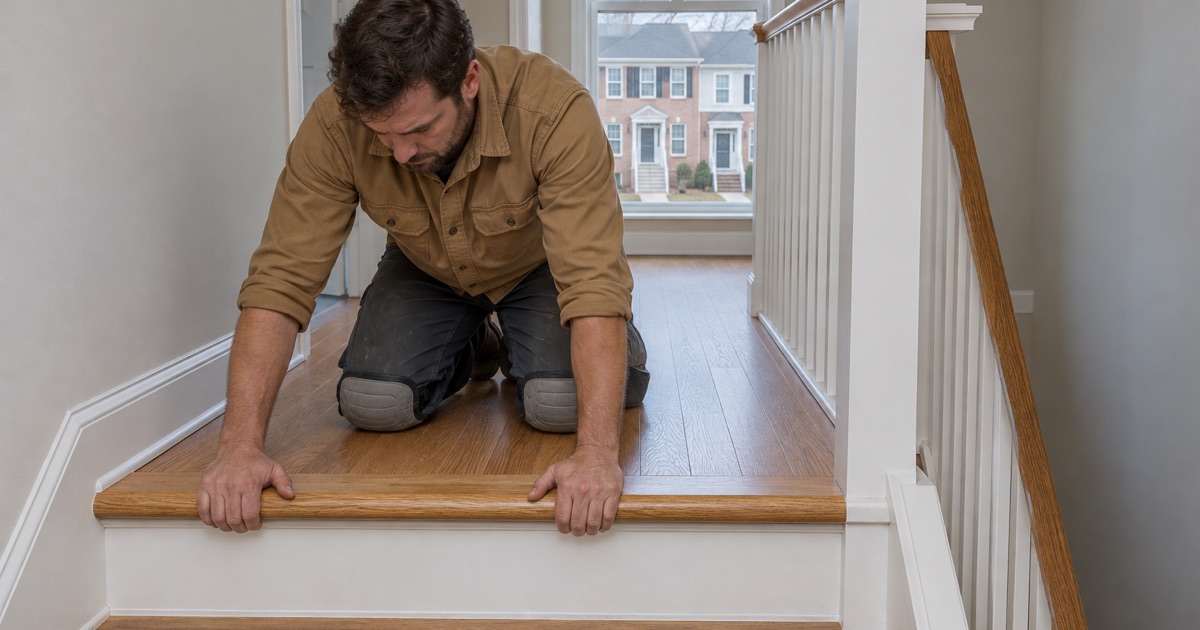
Carpeted stairs usually hide rough construction treads that were never meant to show. We remove them and install new hardwood stair treads, risers and nosing, stained to match the floor above or below. Railings and balusters stay in place unless you are replacing them too.

Solid, Engineered, Laminate and Vinyl Plank Compared

Solid hardwood can be sanded many times; engineered wood adds stability below grade; laminate and luxury vinyl plank resist scratches but cannot be refinished. We walk through Janka hardness, cost and lifespan so you choose the floor that fits your household, not the product with the biggest margin.

Engineered Wood for Terrace Levels

Terrace-level and basement rooms sit below grade, where solid hardwood cups and gaps with ground moisture. Engineered wood with a proper vapor retarder is the right floor there. We test the slab first, and ASTM F2170 in-situ humidity testing is the method NWFA guidelines point to for concrete.

Prefinished or Site-Finished

Prefinished boards arrive with a factory finish and go into service quickly with less odor. Site-finished floors are sanded and coated in place, which allows custom stain colors and a seamless surface across the whole room. We explain the tradeoffs in time, cost and appearance for your specific rooms.

White Oak and Wide Plank

White oak takes gray and natural finishes well and has become the most requested species for new floors. Wide plank boards show more grain but move more with humidity. We check acclimation carefully and fasten wide boards correctly so seams stay tight through the humid months.

Herringbone and Chevron Patterns

Herringbone uses rectangular pieces laid at right angles; chevron uses pieces cut at an angle to form a continuous point. Both need a precise layout line from the center of the room. We plan the pattern around doorways and focal walls before installation starts.

Nail-Down, Glue-Down and Floating Installs

Nail-down floors fasten solid wood to a wood subfloor; glue-down engineered floors bond to concrete; floating floors lock together over an underlayment. The subfloor usually decides the method. We explain which one your home needs rather than defaulting to the fastest install.

Flooring Cleats Versus Staples

Flooring cleats and flooring staples both hold tongue and groove boards, but they behave differently as wood moves. Cleats flex slightly with seasonal movement; staples grip harder and can split denser species. We choose the fastener the manufacturer and the NWFA Installation Guidelines call for.

Moisture Readings and Acclimation

Before installation we read the moisture content of the new boards and the subfloor, and we let the boards acclimate until the difference falls within the manufacturer’s range. Skipping acclimation is how new floors gap in winter or cup in summer within their first year.

Closings, Claims, Rentals And Historic Homes

Worker fitting a new oak landing nosing at the top of the stairs in an empty Marietta rental townhouse between tenants.

What a Georgia Termite Letter Covers

The Official Georgia Wood Infestation Inspection Report, commonly called a termite letter, reports visible evidence of wood-destroying insects. According to the Georgia Department of Agriculture fact sheet, it is not a structural report and skips areas hidden under floor coverings. Its 90-day guarantee covers treatment only, never floor repair.

Termite-Damaged Floors at Closing

When an inspection turns up damaged boards before a closing date, sellers and buyers need a clear scope and a firm price quickly. We inspect the floor, write an itemized repair estimate and schedule the work around the closing calendar. Who pays is a question for the purchase contract, and our estimate gives both sides the same numbers.

VA and FHA Wood-Destroying Insect Reports

VA requires wood-destroying insect information for homes throughout Georgia. FHA asks for it only under stated conditions, such as when it is customary locally, required by state or local law, or when there is evidence of infestation. Either way, if the report finds floor damage, we provide the repair scope the lender file needs.

Documenting Water Damage for Adjusters

Insurance adjusters want to see where the water went and how wet the floor got. We photograph moisture readings room by room, note which boards are salvageable, and write the estimate in the same order. That documentation helps your claim move quickly because the adjuster does not have to guess.

Flood Insurance and Finished Basements

The National Flood Insurance Program limits what it covers in a basement, which can surprise owners of finished terrace levels. FEMA’s consumer guidance notes coverage starts 30 days after purchase. We document basement floor damage clearly, and your agent explains exactly what your policy covers.

Historic District Floor Work in Marietta

Marietta’s historic districts, including Church-Cherokee and Kennesaw Avenue, are protected by a preservation ordinance. The city states that a certificate of appropriateness is not required for interior changes. Refinishing or replacing floors inside a historic home therefore goes ahead without design review, though we still treat original heart pine and oak with care.

Townhome and Condo Association Rules

Many townhomes and condos have declarations that govern flooring, including sound underlayment, work hours and approval before installation. We ask you to check your own declaration before we start, and we build any required underlayment into the estimate so the association has no reason to stop the job halfway.

Rental Move-Out Floor Damage

Georgia landlords covered by O.C.G.A. 44-7-33 must give tenants a move-in damage list and a move-out inspection list with estimated dollar values. Our itemized floor estimates separate normal wear from damage like pet urine, deep gouges or water staining, so a landlord has a documented number to put against the deposit.

Lead-Safe Sanding Before 1978

Homes built before 1978 may have lead-based paint on baseboards, trim or even old floor finishes. The EPA RRP Rule under TSCA Title VI sets lead-safe practices for renovation work in those homes. We check your build year before sanding and plan the job accordingly, rather than finding out after the dust is already in the air.

Old Tile and Black Mastic

Old floor tile and black mastic in older homes can contain asbestos. Georgia rules require a licensed abatement contractor for removing floor covering in a friable manner. We never scrape it ourselves or advise homeowners to, and we coordinate with abatement contractors so the hardwood work begins once the area is cleared.

Areas We Serve

Marietta Wood Flooring provides wood-flooring throughout the greater Marietta area, with the same crews and the same standards on every job.

Good to know

Frequently Asked Questions

How much does hardwood floor refinishing cost in Marietta?

Published Atlanta-area ranges for a full sand and refinish run roughly $3 to $8 per square foot, and one Marietta shop lists $3 to $5. Where your floor lands depends on its condition, the number of coats, whether you change the stain color and how much repair comes first, so we quote after seeing the boards.

How long does a full refinish take, and can we stay in the house?

Most single-level jobs take a few days of sanding, staining and coating, followed by cure time before furniture goes back. Many families stay home and live around the work room by room, but pets and anyone sensitive to finish odor are better off elsewhere while the first coats dry.

Is a screen and recoat cheaper than refinishing?

Yes. A screen and recoat abrades the existing finish and adds a fresh coat without sanding into the wood, so it costs a fraction of a full refinish. It only works when the wear is still in the finish; gray, bare traffic lanes and deep scratches need the full sand.

Do you need a permit to replace flooring in Marietta?

The City of Marietta's permit page says permits are not required for painting, flooring and fencing. That is the city's web guidance, and it covers addresses inside city limits. If your home sits in unincorporated Cobb County or another city, we check that jurisdiction's own rule before work starts.

What does a stair job cost?

Stairs are priced per step, not per square foot, because every tread has its own nosing, returns and edges. One Atlanta source publishes $75 to $150 per step for new treads and $25 to $75 per step for refinishing. We count your treads, risers and landings and price each one.

Should I choose solid or engineered hardwood?

Solid hardwood suits main and upper levels over a wood subfloor and can be sanded many times over its life. Engineered wood is the right choice below grade and over slabs, where solid boards move too much with moisture. The engineered wear layer decides how many future sandings it can take.

Which finish do you recommend, water-based or oil-modified?

Waterborne polyurethane dries clear, cures faster and keeps light oak and white oak from ambering. Oil-modified polyurethane warms the color and builds a thicker coat per pass. Hardwax oil gives a low-sheen look that spot-repairs easily but needs regular maintenance. We lay stain samples and sheen options on your own boards before choosing.

Can you match new boards to my existing floor?

Usually, yes. We identify the species, board width and cut, source matching stock, and lace it into the existing run so the joints stagger naturally. The patched area is then sanded and finished with the surrounding floor, which is what makes the repair disappear.

Are there floors you will not sand?

We will not sand an engineered floor whose wear layer is too thin to survive it, a floor still wet from a leak, or a floor in a pre-1978 home until the build year and paint question are settled. We also never remove old tile or scrape black mastic; that belongs to a licensed abatement contractor.

Do you give written estimates?

Every estimate is written and itemized: square footage, stairs by the tread, repairs, removal of old flooring and the finish system. That same format works for a landlord building a move-out damage list or a seller answering a buyer's repair request.

Ready to Get Started?

Request a free quote today and we'll get back to you fast.