
Marietta Wood Flooring helps homeowners replace carpet with hardwood in Marietta, GA, serving surrounding cities including Fair Oaks, Holly Springs, Smyrna, Kennesaw and Vinings. With more than 20 years on wood floors, we handle the whole change: pulling up the carpet, pad and tack strip, preparing the subfloor, and installing hardwood that ties into the rest of the house.
A carpet-to-hardwood project can be one bedroom, a bonus room or an entire upstairs. Many two-story homes in Cobb County subdivisions were built with hardwood on the main level and carpet everywhere else, and owners want the wood to continue up the stairs and through the bedrooms. That continuity is what we plan for from the first visit.
The work is more than laying boards where carpet used to be. The subfloor that sat under padding for years is often uneven or squeaky, and the transitions at doorways, tile and stairs have to be planned before the first board goes down.
What Happens When the Carpet Comes Up
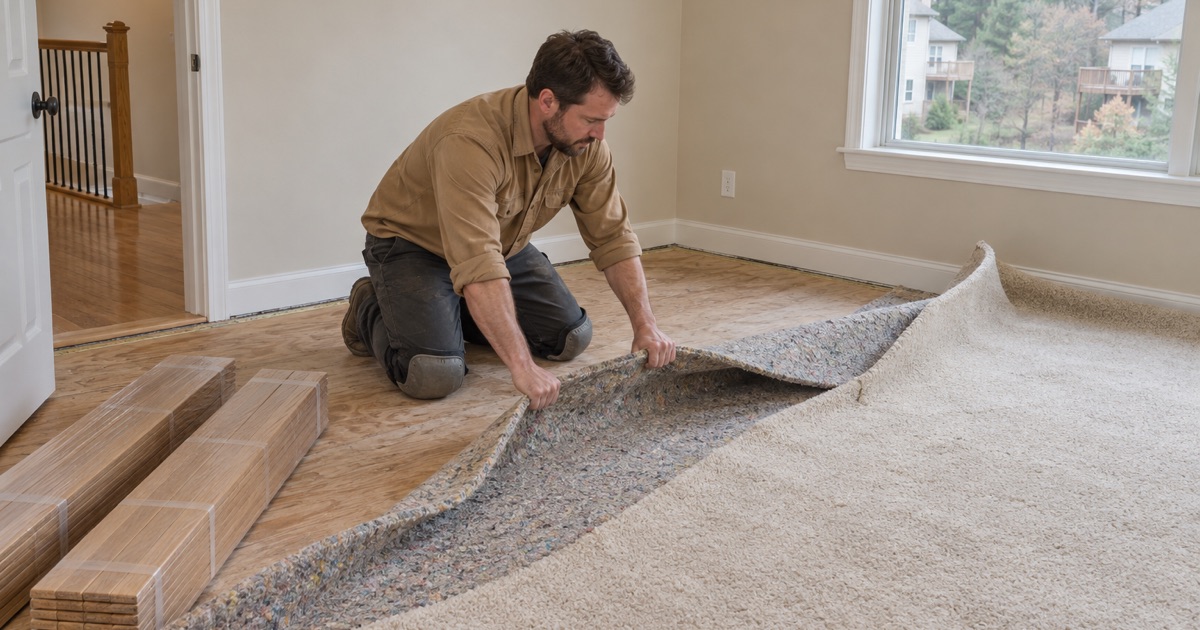
Removing Carpet, Pad and Tack Strip
We cut and roll the carpet, remove the carpet pad, pull every tack strip and staple, and haul it all away. The subfloor is then scraped and swept clean. This step reveals what the carpet was hiding, which is why we price it as its own line and inspect before quoting the rest.
Pet stains are common under old carpet, especially in bedrooms and bonus rooms. Urine that soaked through the pad into the subfloor carries odor, and we seal or replace those subfloor areas so the smell does not come back through the new floor.
Finding Hardwood Underneath
In older homes, lifting the carpet sometimes reveals oak or heart pine that was covered decades ago. If the boards are sound and have enough wood left above the tongue, refinishing them is usually faster and cheaper than installing new hardwood. We check a closet corner before the estimate so you know which job you are paying for.
The tack strip leaves a row of nail holes around the room’s edge on old hardwood, and staples leave small holes across it. Most of those fill and disappear in the refinish.
Subfloor Squeaks and Low Spots
Plywood and OSB subfloors under carpet were never meant to be seen, and padding hides squeaks and dips. Once exposed, we refasten loose panels to the joists, sand high seams and level low areas. Hardwood installed over an uneven subfloor rocks and squeaks, so this preparation is part of every conversion.
We also look at the subfloor’s thickness and condition near bathrooms and laundry rooms, where old leaks often softened the panels without anyone noticing through the padding. Those soft sections are replaced before hardwood goes over them.
Choosing the New Floor
Solid Hardwood Upstairs
On wood subfloors, solid hardwood nailed through the tongue is the classic choice. It can be sanded and refinished many times, matches most existing main-level floors and adds lasting value. We match species and width to the downstairs floor so the house reads as one.
New boards acclimate in the house before installation, and we confirm their moisture readings against the subfloor. Bedrooms that were closed off or rarely heated and cooled can sit at different humidity than the rest of the house, so we check those rooms too.
Engineered Hardwood Where It Fits Better
Engineered hardwood suits bonus rooms over garages, terrace levels and slab areas where moisture or height is a concern. It is thinner than most solid floors, which helps at transitions next to existing carpet or tile that is staying.
A bonus room over a garage is a common case. The garage below can run hot and humid in summer, and an engineered floor handles those swings with less movement than solid boards in the same spot.
Laminate and Vinyl Plank as Alternatives
Some owners compare hardwood with laminate and luxury vinyl plank before deciding. Those products resist scratches and cost less upfront, but they cannot be refinished and rarely match an existing hardwood floor. We lay out the tradeoffs honestly so the choice fits your plans for the house.
Matching and Blending With Existing Floors
Continuing the Main Floor Upstairs
When hardwood already runs through the main level, the new floor upstairs should look related. We match species, width and color, and where the budget allows, we refinish the main floor at the same time so both are sanded and stained together.
When the main floor is prefinished, we look for the same product or the closest current match from the manufacturer. Prefinished lines change over the years, so we bring a sample board to compare against yours before ordering.
Weaving Into Existing Hardwood
Where carpet sits next to an existing hardwood room, such as a dining room that was carpeted while the foyer was not, we weave the new boards into the old rows instead of stopping at a straight line. That removes the seam that would otherwise mark where the carpet used to be.
The woven area and the old floor are sanded and finished together. That step is what makes new and old boards look like they were always one floor.
Stairs, Transitions and Details
Carpeted Stairs Between Hardwood Floors
Stairs usually have rough treads under the carpet. We remove it and install new hardwood stair treads, risers and nosing, stained to match the floors. Stair work is priced tread by tread so you can see its cost separately from the rooms.
Doorways, Closets and Registers
We plan transitions at bathrooms, closets and any rooms keeping carpet, using reducers and thresholds that match the new wood. Heating registers are cut in cleanly, and closet floors are included or finished with a clean edge, based on what you choose.
Baseboards After the Carpet Is Gone
Baseboards installed over carpet often sit high, leaving a gap once the carpet is removed. We add quarter round or adjust the trim so the new floor meets the wall cleanly.
Rentals and Resale
Landlords often replace carpet with hardwood between tenants, because a wood floor survives turnover far better than carpet that has to be replaced every few leases. Sellers do the same before listing, since buyers notice carpeted bedrooms next to a hardwood main floor. We schedule around vacancy dates and listing deadlines.
- 20+ Years on Wood Floors
- Free Written Estimates
- Moisture Checked Before Sanding