
Marietta Wood Flooring handles hardwood floor staining in Marietta, GA, serving surrounding cities including Fair Oaks, Holly Springs, Smyrna, Kennesaw and Vinings. For more than 20 years we have sanded floors to bare wood and changed their color, whether that means taking a honey builder finish darker, cooling it to a gray, or stripping it back to natural.
Staining is where a floor’s look changes most, and it is also where mistakes are hardest to undo. A color that looked right on a showroom sample can turn pink, blotchy or far darker on your own boards. That is why every staining job we do starts with samples on your sanded floor, viewed in your own light, before the full room is stained.
A color change is part of a full sand and refinish, not a separate coat over the old finish. The old stain and finish have to come off completely for a new color to take evenly.
Popular Color Changes on Builder Oak
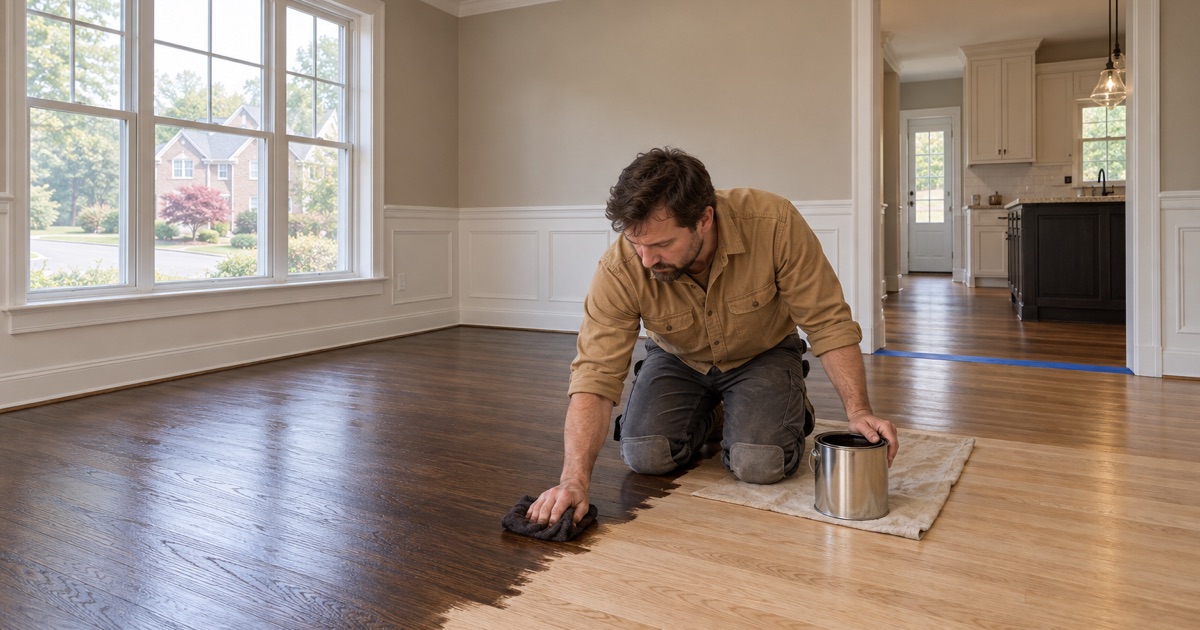
From Golden to Dark Brown
Many subdivision homes around Marietta have red oak floors finished in a honey or golden tone. Dark browns like espresso and walnut are the most common change we make, giving the room a deeper, more modern look. Dark stains need especially careful sanding, because any swirl or scratch left behind shows clearly under a dark color.
We usually recommend testing two or three dark samples side by side. The difference between a medium brown and a near-black looks small on a board and large across a whole room.
Gray and Cool Tones
Gray floors remain popular, but red oak’s pink undertone fights cool colors. A gray on red oak can end up looking lavender or muddy unless the tone is adjusted. White oak takes gray far more cleanly. We blend and test on your floor until the result reads as the gray you want, not a surprise.
Natural and Clear Finishes
Some owners want no stain at all. Sanding off an ambered finish and applying a clear waterborne polyurethane shows the wood’s own color, lighter and cooler than the old orange oak look. Natural finishes are forgiving too, because they hide wear and dust better than very dark or very light stains.
A natural finish on red oak still has warmth from the species. Owners who want a paler, Scandinavian-style look often need white oak or a specialty treatment rather than a clear coat alone.
How We Get Even Color
Sanding to a Clean Surface
Stain shows every flaw in the sanding. We move through the grit sequence with a drum sander and edger, then blend with an orbital sander so the field and the edges take stain the same way. Edges that are sanded differently from the middle of the room show up as a frame of different color.
We inspect the floor under a work light before staining. A scratch found at this stage takes minutes to fix; the same scratch found under stain means resanding the area.
Water Popping for Deeper Color
Water popping means wetting the sanded floor lightly so the grain opens before staining. It helps oak absorb stain more deeply and evenly, which makes darker colors richer and reduces streaks. It also adds drying time, so we build it into the schedule when a dark color calls for it.
Stain Samples on Your Floor
We apply stain samples on your sanded boards, usually near a window and in a darker part of the room, so you see how each color looks in different light. Stain dries lighter than it looks wet and changes again under the finish, so we show samples with finish over them when the choice is close.
Taking a photo of the samples in the morning and evening helps many owners decide. The room’s light changes the color more than people expect.
Species That Take Stain Differently
Red Oak and White Oak
Red oak and white oak both take stain predictably and evenly, which is why they suit color changes best. Red oak’s pink undertone matters with grays and whites, while white oak’s tighter grain and cooler tone suit contemporary colors. We match the stain to the species rather than forcing one formula on both.
Maple and Pine
Maple and pine absorb stain unevenly and tend to go blotchy, especially with darker colors. On those floors we test carefully and often recommend a lighter tone, a clear finish or a conditioner step. A blotch-free maple floor comes from choosing the right color, not from sanding harder.
Heart pine in older houses already has a rich natural amber color. Most owners of those floors choose a clear finish that deepens the natural tone instead of covering it with stain.
Hickory
Hickory has strong natural contrast between light and dark boards. Stain softens that contrast only slightly, so we show owners what their hickory will look like under the chosen color before committing the whole floor.
Finishing Over New Stain
Choosing the Topcoat
Oil-modified polyurethane warms and ambers over time, which changes light stains and grays. Waterborne polyurethane stays clear and keeps the stain color truer. Hardwax oil gives a low-sheen, natural look over stain. We choose the topcoat to protect the color you picked, not change it.
Clear finishes fall under the federal varnish category in 40 CFR 59 Subpart D, and we choose products by that category rather than the floor-coating limit written for opaque coatings.
Sheen Level
The sheen level affects how the new color reads. Gloss makes dark colors look richer but shows every scratch; matte and satin hide wear and dust. Most families choose satin or matte for stained floors in busy rooms.
- 20+ Years on Wood Floors
- Free Written Estimates
- Moisture Checked Before Sanding