
Marietta Wood Flooring repairs termite-damaged hardwood floors in Marietta, GA, serving surrounding cities including Fair Oaks, Holly Springs, Smyrna, Kennesaw and Vinings. For more than 20 years we have cut out boards hollowed by subterranean termites and powderpost beetles and laced in matching wood, after the pest company has done its part.
Termite damage is a repair most flooring companies do not advertise, and most pest control companies do not do. The pest company treats the house; the damaged boards stay behind. That is the gap we fill, with carpentry rather than cosmetic patching, so the repaired floor carries weight and passes the next inspection.
Many of our termite repairs start with a real estate deadline. An inspection before closing finds damaged boards, and a seller and buyer need a clear scope and a firm price quickly. We work to that calendar.
Recognizing Wood-Destroying Insect Damage
Subterranean Termites
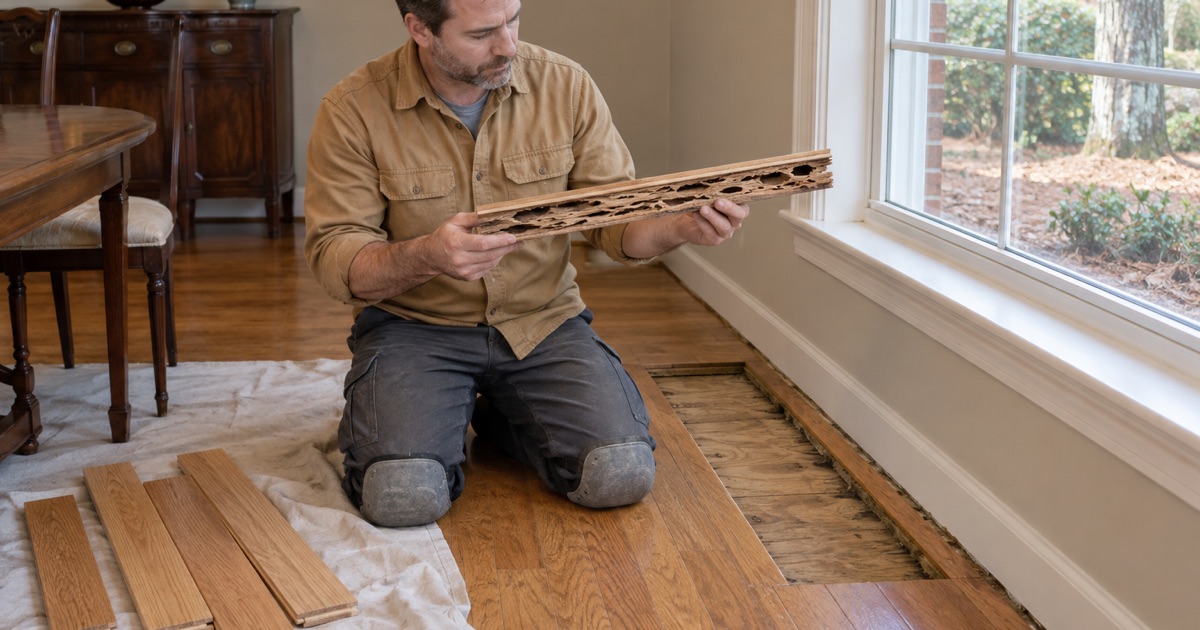
Subterranean termites travel from the soil through mud tubes along foundations and piers, then eat wood from the inside out. In a floor, that leaves boards that look intact but sound hollow and give under weight. The finish may blister or ripple where the wood beneath has been eaten away.
Damage often follows the line of a joist or the edge of a wall where termites entered. We trace it along the floor to find where the damage ends before planning the cut.
Powderpost Beetles
Powderpost beetles leave tiny round exit holes in the surface and fine, flour-like frass that sifts out of the wood. They attack hardwoods such as oak and are common in older homes and in reclaimed or poorly stored lumber. Their damage is often more scattered than termite damage.
Fresh frass and new holes appearing after a refinish are the sign that beetles are still active. We stop and refer the house for treatment rather than refinishing over live insects.
Old House Borer
The old house borer attacks softwoods such as pine, including subfloors and framing, and leaves larger oval exit holes. In an older house with heart pine floors, telling this insect apart from powderpost beetles matters because the treatment and the extent of the damage differ.
Because it favors softwood, the old house borer may have damaged the subfloor or joists without touching an oak floor above. We look below the floor from the crawlspace when damage in pine is suspected.
How We Repair Termite-Damaged Floors
Treatment First, Then Repair
We repair after a licensed pest company has treated, never before. Installing new boards into an active infestation gives the insects fresh wood. If the house has a termite bond, the pest company handles treatment under it; floor repair is a separate job.
We can inspect the flooring while treatment is being arranged, so the repair scope is ready by the time the pest company is finished. That overlap often saves a week on a tight closing schedule.
Cutting Back to Sound Wood
We cut out every damaged board back to solid wood, probing the boards around the visible damage because tunneling often extends further than it looks. The subfloor underneath is checked as well. Damaged subfloor is replaced before any new hardwood goes in, and anything that looks structural is referred to the right trade.
We would rather replace one extra board than leave a hollow one at the edge of the repair. A hollow board left in place gives way months later and leaves the whole repair looking unfinished.
Lacing In Matching Boards
New boards are laced into the existing rows with staggered joints, matched in species and width. Once the area is sanded and finished with the surrounding floor, the repair blends in rather than showing as a square patch.
For older floors, we look for reclaimed boards with similar age and color. Matching an old heart pine floor with new pine rarely looks right, and the extra effort to find the right stock shows in the finished room.
Termite Damage at Closing
What the Termite Letter Covers
The Official Georgia Wood Infestation Inspection Report, often called a termite letter, reports visible evidence of wood-destroying insects. The Georgia Department of Agriculture fact sheet says it is not a structural report and does not inspect areas hidden under floor coverings. Its 90-day guarantee covers treatment only, never floor repair.
That means a clean letter does not guarantee a sound floor, and a letter that finds activity does not pay for damaged boards. Floor repair is a separate scope that the buyer and seller have to settle.
VA and FHA Wood-Destroying Insect Reports
VA requires wood-destroying insect information for homes throughout Georgia. FHA asks for it only under stated conditions, such as when it is customary in the area, required by state or local law, at the lender’s discretion, or when there is evidence of infestation. If that report finds damaged flooring, lenders often want the repair documented.
Estimates Both Sides Can Use
Our written estimate itemizes the boards to be replaced, the subfloor work and the finishing, so the seller, buyer and agents all work from the same numbers. We photograph the damage before we start and the completed repair after, which is the record a lender or buyer asks for.
We do not decide who pays. That is set by the purchase contract. Our job is to give both sides a clear scope and a firm schedule that fits the closing date.
After the Repair
Refinishing to Blend the Repair
A repaired area finished on its own may differ in color and sheen from the rest of the floor. Sanding and refinishing the room, or at least to a natural break like a doorway, makes the new boards disappear.
When a sale is pending, a full refinish may not fit the budget or the calendar. In that case we stain the new boards to the closest match on sample pieces and blend the edges, and we tell you in advance how close that result will look.
Keeping Moisture Down Below
Subterranean termites favor moist soil and damp wood. A crawlspace with a working vapor retarder and dehumidifier protects both the floor and the treatment, and we point out moisture problems we see during the repair.
Wood stacked against the foundation, mulch piled high against siding and leaking gutters all invite termites back. Those fixes belong to the homeowner and the pest company, but we mention them when we see them next to a repaired floor.
- 20+ Years on Wood Floors
- Free Written Estimates
- Moisture Checked Before Sanding